On Saturday night, I went to see You Can See Everything, the new documentary about Theranos founder Elizabeth Holmes.
I can’t remember the last time a film made my brain work so hard. I spent much of it trying to process what I was watching and decide how I felt about it all.
One scene, in particular, stopped me in my tracks. For me, it transformed the film into a fascinating study of human communication, with profound implications for our professional relationships.
Earlier in the film, documentarian Nathan Fielder questions Holmes about the blood-testing technology that led to her fraud conviction. Holmes makes a statement that could easily be interpreted in different ways. Fielder presses her for clarification, but they seem unable to bridge the gap between what she’s saying and what he’s hearing.
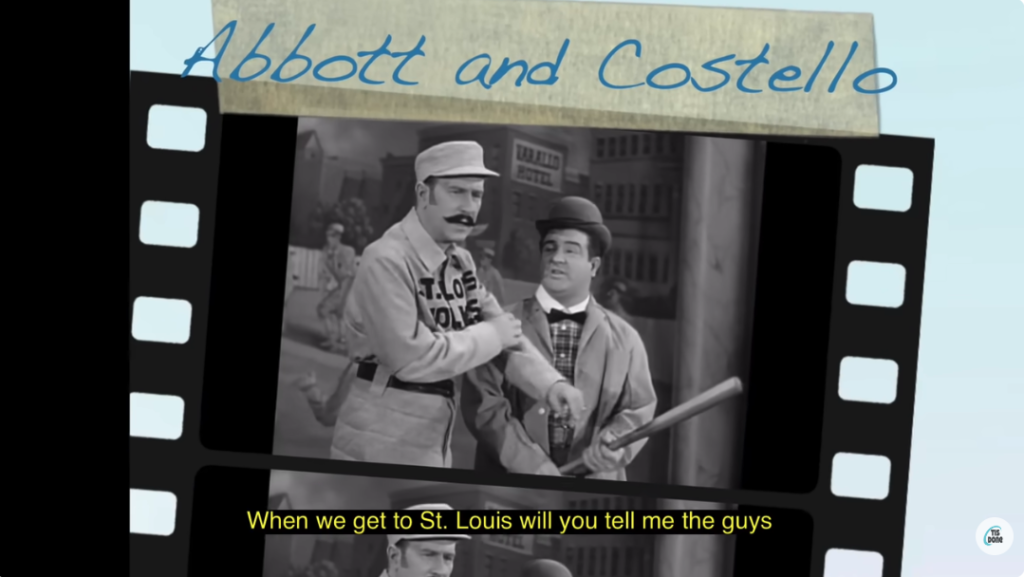
Later, Fielder plays Holmes and her partner, Billy Evans, the classic Abbott and Costello comedy sketch, Who’s on First?
The sketch revolves around a baseball team with players called Who, What and I Don’t Know. The conversation descends into hilarious confusion as reasonable questions produce increasingly absurd answers.
But Holmes doesn’t get the joke.
She laughs along, recognising that something is supposed to be funny, but appears unable to understand why. She takes the conversation literally, missing the double meanings that make the sketch work.
Suddenly, the earlier exchange takes on a different complexion.
The scene doesn’t change the facts of Holmes’ conviction, but it raises a fascinating question.
What happens when the meaning we intend isn’t the meaning someone else receives?
Think about your own professional relationships.
How often have you explained something that seems obvious to you, only to be met with confusion, resistance or a response that misses the point?
Perhaps you’ve repeated yourself or become frustrated that the other person simply doesn’t understand.
But what if they’re interpreting your words through a completely different lens?
We communicate from inside our own heads, armed with our experiences and assumptions. We forget that the person opposite us doesn’t share that context.
What seems obvious to us may be anything but obvious to them.
When communication breaks down, our instinct is often to repeat the message more forcefully rather than question our approach.
If your message isn’t landing, don’t immediately blame the listener. Take responsibility for making yourself understood.
Ask what they’re hearing. Explore how they’re interpreting your words. Try a different explanation or ask a question that uncovers where your understanding diverges.
And, crucially, listen to the answer.
Effective communication isn’t simply about saying what you mean. It’s about ensuring that what you mean is what the other person understands.